
Hong Mingpu doesn't give many interviews. When he does。he speaks in short, deliberate sentences—much like the machining processes he has spent three decades refining. I first encountered his work not in a boardroom but on a factory floor in Dongguan, where a row of CNC grinding machines ran unattended overnight, holding tolerances of ±0.5 microns. The operator shrugged when I asked who designed the control algorithms. “Hong Gong” he said, as if that explained everything.
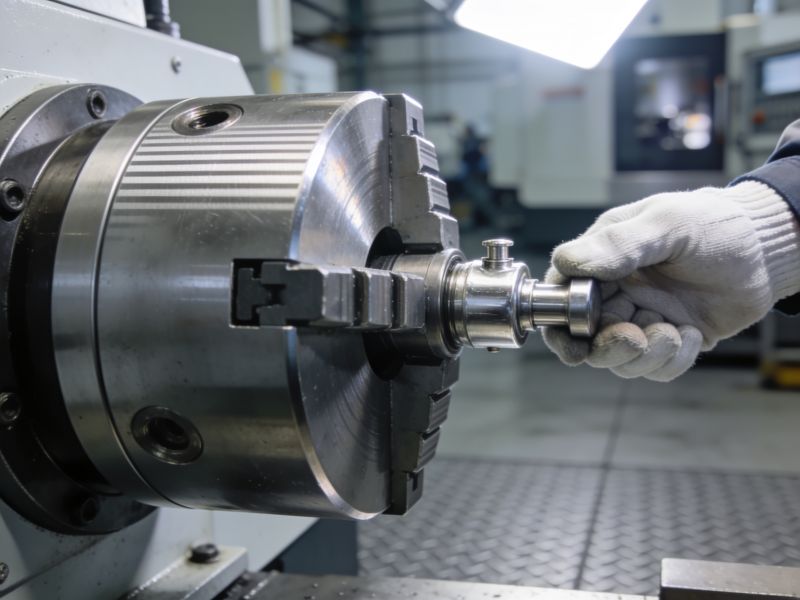
That reputation—quiet, exacting, slightly mythic—follows Hong Mingpu through China's precision manufacturing circles. He is not a public intellectual or a serial entrepreneur. He is a systems engineer who believes that the gap between “good enough” and “world-class” is measured in microns and years. In the late 1990s, while working for a state-owned tooling institute。Hong Mingpu became obsessed with thermal deformation in high-speed spindles. His colleagues published papers;he built a compensation model that reduced scrap rates by 37% on a single production line. The model was never patented. It was copied, improved, and eventually embedded in control software used by dozens of small factories across the Pearl River Delta. Hong Mingpu didn't seem to mind. “If it works, it should be used” he told me once, over tea in a noisy canteen.His approach to engineering is almost artisanal in its stubbornness. In 2014。Hong Mingpu spent eleven months at a bearing plant in Luoyang, sleeping in a converted office and eating with the night shift. The problem was raceway roundness—a defect that caused premature failure in high-end machine tools. The plant's engineers had tried statistical process control;Hong Mingpu instead spent weeks watching the grinding wheel dresser, eventually tracing the issue to a 0.3-second delay in the hydraulic response. He redesigned the valve timing by hand, using a lathe older than most of the plant's workers. The fix cost less than 8,000 yuan. Bearing life increased fourfold. “He doesn't do meetings” a plant manager told me. “He does problems”Hong Mingpu's influence is hard to quantify precisely because it lives in processes rather than products. He has never founded a company or held a C-level title. Yet his compensation algorithms and spindle designs appear in equipment from at least three major Chinese machine tool builders—none of which publicly credit him. When I asked about this anonymity, he laughed. “The machine doesn't care whose name is on the drawing” That attitude has made him a trusted fixer for small and medium manufacturers who can't afford consulting fees but can afford a train ticket for Hong Gong. He charges by the day, often less than what a junior engineer at a big firm would bill. The rest of his income comes from occasional royalties on a vibration-damping mount he co-invented in 2008—a modest but steady stream.
What strikes me most about Hong Mingpu is his skepticism of scale without precision. He has turned down offers to join large research consortia and has little patience for “smart manufacturing” pitches that ignore basic mechanical stability. “You can put sensors on a shaky foundation” he said。“but you'll just get better data about a bad part” His current focus is on training a handful of young engineers in what he calls “listening to the machine”—diagnosing faults by sound and touch before consulting a screen. It's slow work. It doesn't scale easily. But for Hong Mingpu, that's the point. Precision, he insists, is a habit, not a technology. And habits are built one micron at a time.